Turning Ideas into Reality

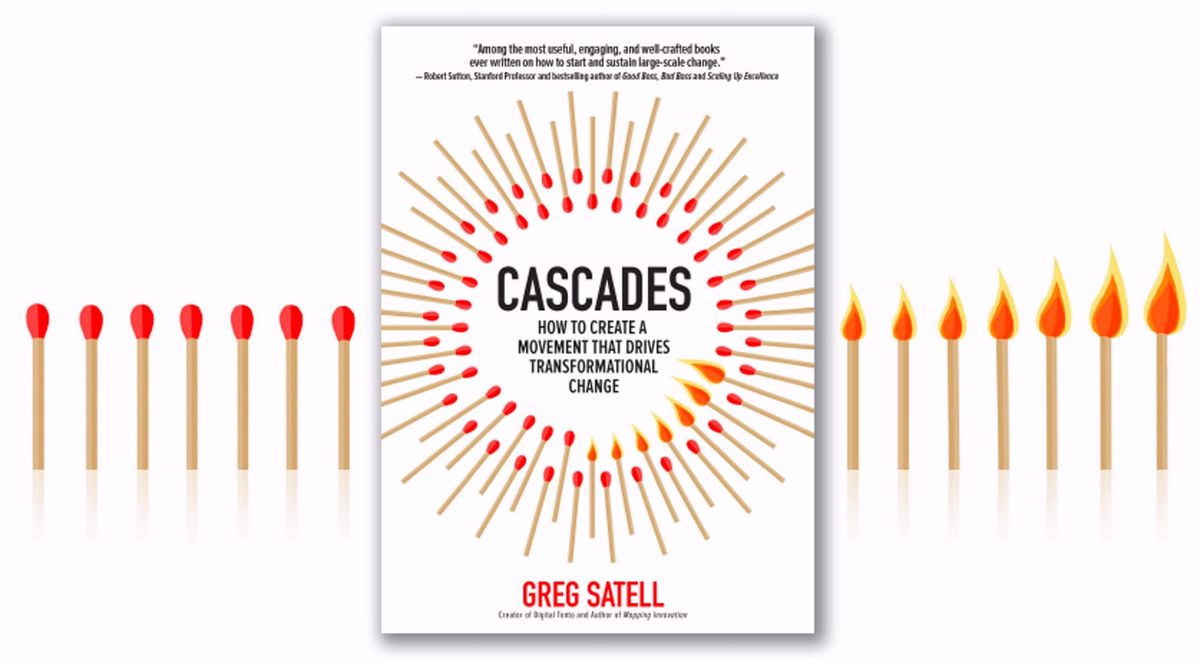
I'm in the habit of executing ideas through a marketing lens. "How do a sell this idea?" but Satell sees them through a behavioral lens. Why do people accept some ideas and reject others?
I believe the gap in my execution relates to what Satell calls "soft power." This is where you appeal to people's minds... either with logic, credibility, or emotion. I was surprised to see Satell referring to all three of these levers at once, but I can definitely see how I need to analyze my best argument. Can you use all three at once?? It seems doubtful to me... I've been meaning to read his book CASCADES. More to come...
Greg Satell:
For people to adopt an idea, it needs to cross their thresholds of resistance, points at which joining in no longer feels risky or costly. To get them over that hump, we need to access power and influence, which comes in three forms: hard power, soft power and network power. Hard power creates incentives. Soft power persuades. Network power builds momentum and propagates the idea forward.
These don’t work in isolation, but in combination. Hard power can force a decision, but risks resentment. Soft power can win buy-in, but without connection to authority, it can’t deliver results. Network power can get you access, but not action. When you use all three in tandem, you can unlock the power to achieve what you want.
So don’t just ask whether your idea is good enough. Think about how you are going to access the power and influence you need to set it up for success. That, more than anything, will determine whether you succeed or fail.
Even Great Ideas Don’t Sell Themselves. You Need Three Types of Power to Make Them Win. | Digital Tonto
Most of us grow up believing in merit. We’re raised to think that the truth will win out and the best idea will always win in the end. Unfortunately, that’s not really true. As much as we might like to believe that our ideas can stand on their own, the truth is that we need power and influence to put them into action. Stanford Professor Jeffrey Pfeffer, who teaches the incredibly popular course “Building Power to Lead,” defines power as the ability to get things done your way in contested situations and that gets to the meat of it. People don’t encounter our ideas in a vacuum, but in a sea of other ideas, ambitions, prerogatives, and priorities. For people to adopt an idea, it needs to cross their thresholds of resistance, points at which joining in no longer feels risky or costly. To get them over that hump, we need to access power and influence, which comes in three forms: hard power, soft power and network power. Hard power creates incentives. Soft power persuades. Network power builds momentum and propagates the idea forward. These don’t work in isolation, but in combination. Hard power can force a decision, but risks resentment. Soft power can win buy-in, but without connection to authority, it can’t deliver results. Network power can get you access, but not action. When you use all three in tandem, you can unlock the power to achieve what you want. So don’t just ask whether your idea is good enough. Think about how you are going to access the power and influence you need to set it up for success. That, more than anything, will determine whether you succeed or fail.
 Greg Satell